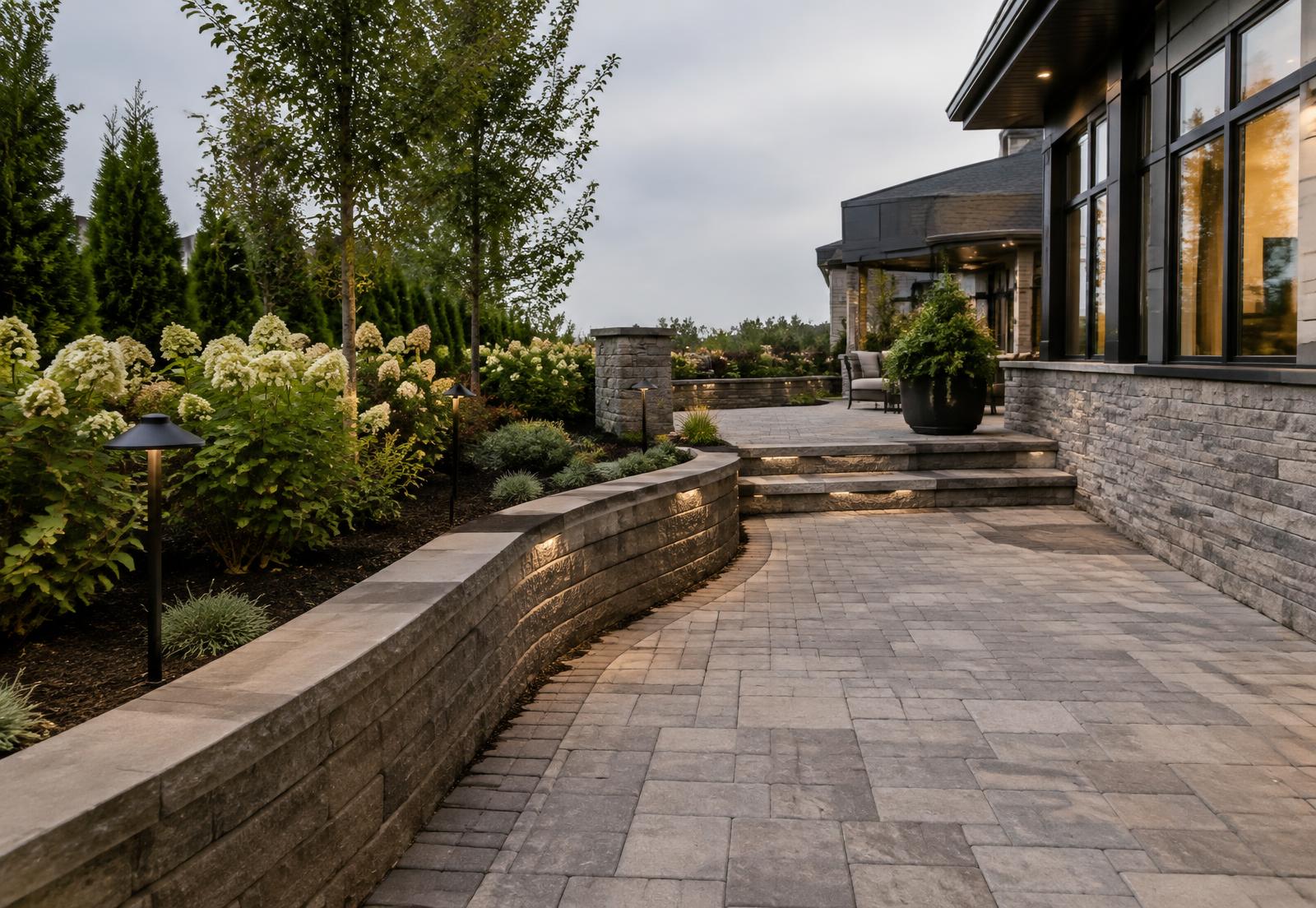
Freeze-thaw cycles, road salt and heavy snow put outdoor surfaces to the test. Here is how material and installation choices hold up.
Why Ontario is hard on hardscaping
Water that seeps into or under pavement expands as it freezes and contracts as it thaws. Repeated many times each winter, this movement can lift, shift and crack poorly built surfaces.
De-icing salts and snow clearing add further wear, especially on driveways.
Concrete pavers
Manufactured concrete pavers are a popular choice. They come in many shapes, colours and textures and are typically dense and durable. Because they are individual units, they can flex with ground movement and be lifted and reset if needed.
Ask about products designed for vehicular use if you are paving a driveway.
Natural stone
Flagstone, granite and other natural stones offer a distinctive, timeless appearance. Performance varies by stone type, so it is important to choose a stone suited to freezing climates and the intended use.
Natural stone is often used for patios, steps and accents, sometimes paired with pavers for driveways.
The base matters most
Regardless of the surface material, longevity depends mostly on what is underneath: adequate excavation depth, a properly graded and compacted granular base, and good drainage away from the home.
When comparing quotes, ask how deep the excavation will be, what base material will be used and how it will be compacted.
Caring for your surfaces
Keeping joints filled, clearing debris and using de-icers appropriate for the material helps preserve the surface. Some homeowners choose to seal pavers; discuss the pros and cons for your specific product.
Inspect after each winter and address any settling early.
This article provides general information only. Requirements vary by municipality and project. Confirm specifics with your municipality and qualified professionals.